
Leading together
A conversation between the president and vice-president
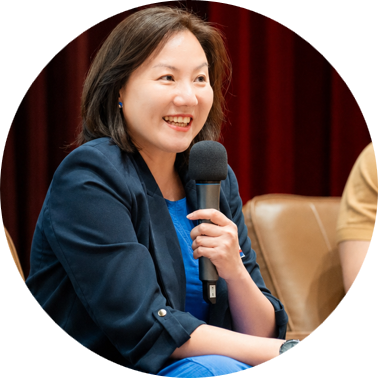
Soh Lai Yee (President)
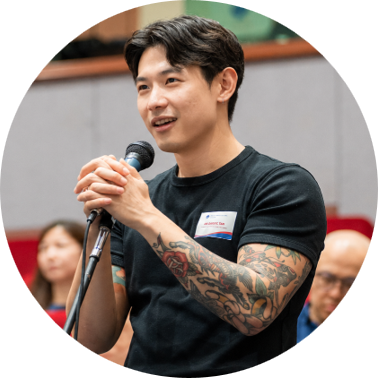
Rayner Tan (Vice President)
Rayner: As you begin this term, what feels most important for SBHS to focus on right now?
Lai Yee: There is a huge opportunity for us to be a connector, catalyst, and contributor.
This committee takes leadership at a time when behavioural health has never been more critical in supporting how individuals, communities, and systems respond to complexity, uncertainty, and change. We can grow as a community that connects research to practice and ideas to impact.
As we look ahead, SBHS remains committed to:
fostering meaningful interdisciplinary collaboration,
supporting rigorous and applied behavioural health work, and
growing a vibrant, inclusive professional community.
I’m so happy to be working with a brilliant, energetic team that brings together continuity and fresh perspectives. Many have served over the past few years, and their steady commitment anchors us with confidence and clarity, and at same time, our newer members are bringing fresh energy and ideas that will help us evolve and remain responsive to the needs of our SBHS community.
🪴
Lai Yee: From early conceptualisation on a piece of napkin and now fast forward to eight years, what is one strength of SBHS that we should build on more deliberately?
Rayner: The strengths of SBHS are embodied in the diversity of its members. Not many know this, but it is worth documenting: despite being a member of the International Society of Behavioral Medicine (ISBM), we made an intentional departure from ISBM to call ourselves a society for Behavioural Health, and not Behavioural Medicine. We felt that this was more inclusive and did not reproduce deep-seated hierarchies in health and medicine, which have been dominated by biomedical paradigms. The society’s interdisciplinary focus is also set in stone in our constitution, which requires the society to be representative of diverse professions, practices, and positionalities.
Today, with the advent of artificial intelligence, I see an opposing desire to have a deeper grasp and appreciation of our shared humanity and what makes us human. What really stands out to me in this moment in time is that the ‘human-ness’ of all our work has become more pronounced - in ways where I’m starting to see even stronger threads that run through all our diverse fields of work, practice, and research. We need to start converging on this and start thinking even harder about what the human condition is, and how we can start advocating for health systems to be more person-centred in meaningful, and not tokenistic ways.
🌻
Rayner: SBHS brings together people from very different backgrounds, including our ExCo team. What kind of leadership culture would you like the ExCo to model for the society?
Lai Yee: I hope we can model a leadership culture that is open, generous, and grounded in purpose. One where we are comfortable holding different perspectives, and where diversity is not just represented, but actively engaged.
At its core, behavioural health is about understanding people, and that begins with how we show up with one another. I would hope for a culture where we listen deeply, challenge thoughtfully, and build on each other’s ideas.
I also think it is important that we model shared leadership. Not everything needs to sit with a few individuals — leadership can and should be distributed. When people feel a sense of ownership, they step forward more naturally, and that is how a society becomes alive and self-sustaining.
Finally, I hope we remain pragmatic and action-oriented. It is easy to stay at the level of ideas, but our role is to translate insights into practice. If we can model a culture that is both reflective and decisive, we would have set a strong foundation for the broader SBHS community.
🤝
Lai Yee: In the same vein, how can ordinary members — regardless of role or seniority — take ownership and lead within SBHS?
Rayner: Ordinary members are considered the ‘shareholders’ of a society, and therefore have voting rights that determine who will be elected to the executive committee, as well as changes to the constitution.
Nevertheless, the Society has many opportunities for engagement beyond serving as an elected member of the executive committee.
We will also be opening a call for co-opted executive committee members, who will serve in specific functions that help advance the society’s aims (e.g., health communications and community engagement).
Additionally, the Society will provide oversight on the International Congress of Behavioral Medicine 2027 local organising committee, which I will chair. This committee will assist the International Society of Behavioral Medicine (ISBM) in organising the congress in 2027. We will need volunteers to help with conference planning and implementation. The scientific programme and content of the conference will be governed by the ISBM, but the Local Organising Committee will assist with making sure that the local activities and planning are well-managed.
🌏
Rayner: At the end of this term, what would success look like for you?
Lai Yee: Success would not just be measured by the number of initiatives we have delivered, but by whether SBHS has become more purposeful and relevant to its members and partners, and the community we serve.
I would hope that we are seen as a trusted platform, where people come not just to learn, but to connect, collaborate, and create. A space where ideas are exchanged openly, and where partnerships form naturally across disciplines.
It would also mean that we have made tangible progress in translating behavioural health into practice, whether through collaborations, contributions to policy conversations, or real-world applications that improve health and wellbeing.
And perhaps most importantly, success would be if more people feel a sense of belonging and ownership in SBHS. That it is not just a society they are part of, but one they actively shape. Join us!
Here’s a question to all of you: 𝗪𝗵𝗮𝘁’𝘀 𝗼𝗻𝗲 𝗯𝗲𝗵𝗮𝘃𝗶𝗼𝘂𝗿𝗮𝗹 𝗵𝗲𝗮𝗹𝘁𝗵 𝗰𝗵𝗮𝗹𝗹𝗲𝗻𝗴𝗲 𝘆𝗼𝘂 𝗵𝗼𝗽𝗲 𝗰𝗮𝗻 𝗯𝗲 𝘁𝗮𝗰𝗸𝗹𝗲𝗱 𝗺𝗼𝗿𝗲 𝗯𝗼𝗹𝗱𝗹𝘆 𝗶𝗻 𝘁𝗵𝗲 𝗰𝗼𝗺𝗶𝗻𝗴 𝘆𝗲𝗮𝗿𝘀 𝘁𝗵𝗿𝗼𝘂𝗴𝗵 𝗿𝗲𝘀𝗲𝗮𝗿𝗰𝗵, 𝗽𝗿𝗮𝗰𝘁𝗶𝗰𝗲, 𝗼𝗿 𝗽𝗮𝗿𝘁𝗻𝗲𝗿𝘀𝗵𝗶𝗽𝘀?